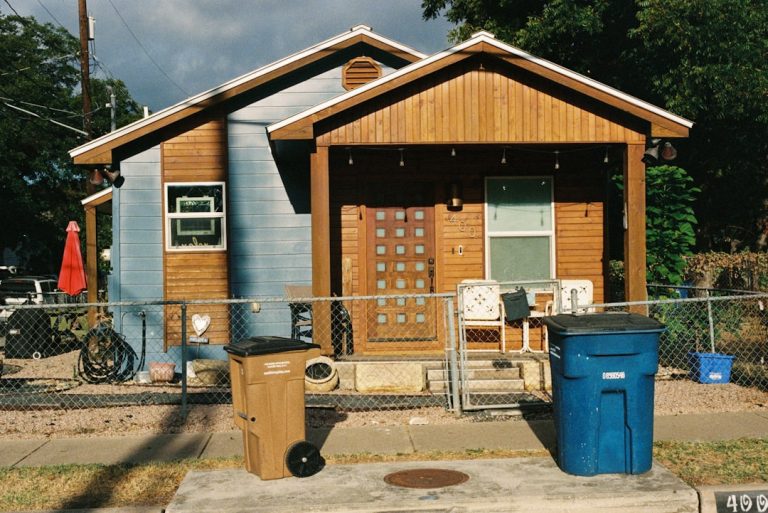

Co-Buying a Home in Austin With a Friend or Sibling
Two incomes, one mortgage payment, and nobody is married to anybody. It is a common setup in Austin right now: two friends, two siblings, or a parent and an adult child who all want to stop renting and none of whom can carry a house alone. The Austin metro median sales price was $412,000 in August 2026, down 6.4% from a year earlier, with 5.1 months of inventory (Unlock MLS and the Austin Board of Realtors, August 2026 Central Texas Housing Report, released September 15, 2026). Prices have softened, but buyers who pool two incomes can still reach a payment that neither one could reach alone.
The mortgage side of co-buying is the easy part. Lenders have underwritten multiple unrelated borrowers for decades. The part that goes wrong, years later, is the part nobody puts in writing: who owns what percentage, what happens when one person wants out, and what happens if one of you dies. Texas law has specific default answers to all three, and the defaults are probably not what you would choose.
Key points:
- Both co-buyers’ incomes and both co-buyers’ debts go into the same debt-to-income calculation. You do not get to leave one person’s car loan out.
- For conventional pricing, Fannie Mae instructs lenders to take each borrower’s applicable score and “select the lowest applicable score from the group” (Selling Guide B3-5.1-02, published 04/22/2026). The stronger credit file does not rescue the weaker one.
- Texas does not give you survivorship automatically. Under Texas Estates Code 111.001, co-owners must agree in writing, and that agreement “may not be inferred from the mere fact that property is held in joint ownership.”
- If only one co-owner lives in the home, the homestead exemption is reduced in proportion to that person’s ownership interest under Texas Tax Code 11.41.
- Any joint owner can force a sale. Texas Property Code 23.001 lets a joint owner “compel a partition,” with or without the other owner’s cooperation.
- A written co-ownership agreement signed before closing is the cheapest part of the whole transaction.
Can two friends get a mortgage together in Austin?
Yes. Conventional, FHA, and VA loans all allow multiple borrowers who are not related and not married, as long as at least one borrower will occupy the home as a primary residence. The lender combines both incomes and both monthly debts into one debt-to-income ratio, reviews both credit files, and issues one loan. There is no separate “co-buying” loan product and no rate penalty for being unmarried.
What surprises most co-buyers is how the credit files combine. They do not average in your favor. Fannie Mae’s rule is to determine each borrower’s applicable score first (the middle of three scores, or the lower of two), then select the lowest of those across all borrowers as the representative credit score for the loan. That representative score is what drives pricing adjustments. Desktop Underwriter may use an average median credit score when it assesses eligibility, so a strong file can still help you qualify, but the pricing generally follows the weakest score in the group.
FHA works the same way and says so more bluntly. HUD Handbook 4000.1 has the lender calculate a minimum decision credit score for each borrower, then use the lowest one for all borrowers. A 580 minimum decision credit score is the threshold for maximum FHA financing, so if your co-buyer sits at 575 and you sit at 740, the file is treated as a 575 file.
So if one of you has a thin or bruised credit file, it is usually worth spending sixty days fixing it before you apply. At Mortgage Austin we pull both files early for exactly this reason.
The loan, the deed, and the tax office are three different things
Co-buyers routinely assume that signing the mortgage together settles ownership. It does not. The note creates the debt, the deed creates ownership, and the county appraisal district decides the tax treatment. All three can be structured differently.
You can be on the loan and off the deed, which means you owe the money and own nothing. Most lenders require every borrower to be on title for a purchase, but the ownership percentages on that deed are yours to set, and this is where co-buyers leave money on the table. If one of you puts down $60,000 and the other puts down $20,000, a deed that says “50/50” has quietly transferred $20,000 of value. The deed can recite unequal percentages instead.
Then there is the homestead exemption, which behaves differently for co-owners than most people expect. Texas Tax Code 11.41 provides that when someone who qualifies for an exemption “is not the sole owner of the property,” the exemption is multiplied by a fraction based on the value of the interest that person owns. In plain terms, if you own half the house and live there while your co-buyer owns the other half and does not, roughly half the exemption value is available. That flows straight into the escrow portion of the monthly payment, so build it into the budget before closing rather than discovering it at the first escrow analysis. Our breakdown of the Texas homestead exemption covers how the exemption itself works.
Should you hold title as joint tenants or tenants in common?
In Texas, tenants in common is the default and joint tenancy with right of survivorship has to be created deliberately in writing. The difference shows up when a co-owner dies. Under tenants in common, the deceased owner’s share passes through their estate to their heirs, which could mean you suddenly co-own a house with your late friend’s brother. With a survivorship agreement, the share passes to the surviving co-owner outside of probate.
| Question | Tenants in common (Texas default) | Joint tenancy with right of survivorship |
|---|---|---|
| How do you get it? | Automatic if the deed says nothing else | Requires a written agreement signed by the co-owners |
| Can shares be unequal? | Yes, any split you record | Typically equal shares |
| If a co-owner dies | Their share goes to their heirs or their will | Their share goes to the surviving co-owner |
| Can you will your share away? | Yes | No, survivorship controls |
| Can one owner force a sale? | Yes, by partition | Yes, by partition |
Texas Estates Code 111.001 is explicit that two or more joint owners “may agree in writing that the interest of a joint owner who dies survives to the surviving joint owner or owners,” and equally explicit that such an agreement “may not be inferred from the mere fact that property is held in joint ownership.” Putting both names on a deed does not create survivorship in Texas. This is a real estate attorney question, not a lender question, and it is worth the short consult before the deed is drafted rather than after.
What happens when one of you wants out?
This is the scenario that decides whether co-buying was a good idea, and the one co-buyers plan for least. Jobs relocate, relationships change, and a three-year plan becomes an eighteen-month plan.
Start with the hard legal backstop: Texas Property Code 23.001 provides that a joint owner of real property “may compel a partition of the interest or the property among the joint owners.” Your co-owner does not need your permission to start that process. For a single-family home that cannot be physically divided, partition generally means a court-ordered sale with the proceeds split. Nobody wants that outcome, which is why the written agreement matters: it gives you an orderly path before anyone reaches for the legal one.
The three ordinary exits are a buyout, a refinance, or a sale. In a buyout, one co-owner purchases the other’s share and refinances into their own name alone, which is the only way to release the departing co-owner from the debt. Removing a name from the deed does nothing to the note. The departing owner stays liable until a new loan replaces the old one, and that obligation counts against their debt-to-income ratio on any next purchase. The mechanics mirror a divorce buyout, minus the family law.
Before closing, a co-ownership agreement drafted by a Texas real estate attorney should settle at least these points: each owner’s percentage and how it was calculated; who pays what share of the payment, taxes, insurance, repairs, and HOA dues; what happens if someone misses their share; how the buyout price gets determined (a named appraisal method beats a guess); how long the other owner has to buy or refinance; whether either owner can rent out their space; and what happens on death or disability. Write it while everyone still likes each other.
Run the numbers against current conditions on our Austin housing market page, and if one co-buyer is a parent rather than a peer, our guide to co-borrowing with parents covers the non-occupant version.
Frequently Asked Questions
Can I buy a house with a friend if we are not married or related?
Yes. Conventional, FHA, and VA loans permit unrelated co-borrowers, and no loan product requires marriage or a family relationship. At least one borrower generally must occupy the home as a primary residence. The lender underwrites the combined incomes, debts, and credit files as a single application.
Whose credit score do lenders use when two friends buy together?
For conventional loans, Fannie Mae has the lender pick each borrower’s applicable score, then select the lowest of those as the representative credit score for the loan, which drives pricing. Desktop Underwriter may use an average median credit score for the eligibility decision. FHA uses the lowest minimum decision credit score among all borrowers.
Do we have to split ownership 50/50?
No. Holding title as tenants in common lets you record any percentage split you agree on, which is useful when down payments are unequal. If one buyer contributes $60,000 and the other $20,000, the deed can reflect that instead of defaulting to equal halves. Decide the percentages before the deed is drafted.
What happens to the house if my co-buyer dies?
Under the Texas default of tenancy in common, the deceased co-owner’s share passes to their heirs or under their will, so you could end up co-owning with someone you have never met. Texas Estates Code 111.001 allows co-owners to sign a written survivorship agreement so the share passes to the survivor instead. Texas does not infer survivorship from joint ownership alone.
Can my co-owner force me to sell the house?
Yes. Texas Property Code 23.001 lets any joint owner compel a partition of the property. Because a single-family home usually cannot be split physically, that typically results in a court-ordered sale with proceeds divided. A written co-ownership agreement with a buyout process is the practical way to avoid ever getting there.
How do we get one person off the mortgage later?
The remaining owner refinances into a new loan in their own name, which pays off the joint loan and releases the departing borrower. Signing a deed to transfer the ownership share does not remove anyone from the note. Until that refinance closes, the departing co-owner remains liable and the payment counts against their debt-to-income ratio.
Do we still get the Texas homestead exemption if only one of us lives there?
Partially. Texas Tax Code 11.41 reduces the exemption in proportion to the qualifying owner’s ownership interest when that person is not the sole owner. An owner-occupant holding a 50% interest sees roughly half the exemption value. Plan the escrow portion of the payment around the reduced amount.
Co-buying works well when the financing and the ownership structure are designed together instead of one after the other. Schedule a discovery call and we will look at what two files qualify for and what to settle before the deed gets drafted, no pressure and no commitment.
Anthony Ferrando NMLS# 1919613 | Client Direct Mortgage NMLS# 1065732 | Licensed in Texas. This content is for educational purposes only and does not constitute a commitment to lend. Loan approval is subject to credit, income, and property qualification. Ownership structure, title, and estate questions are legal matters and should be reviewed with a licensed Texas real estate attorney. All figures shown are illustrative examples, not a rate quote or an offer of credit, and your actual figures will depend on your full financial profile. Sources: Fannie Mae Selling Guide B3-5.1-02 (published 04/22/2026), HUD Handbook 4000.1, Texas Estates Code 111.001, Texas Tax Code 11.41, Texas Property Code 23.001, Unlock MLS / Austin Board of Realtors August 2026 Central Texas Housing Report (released September 15, 2026).