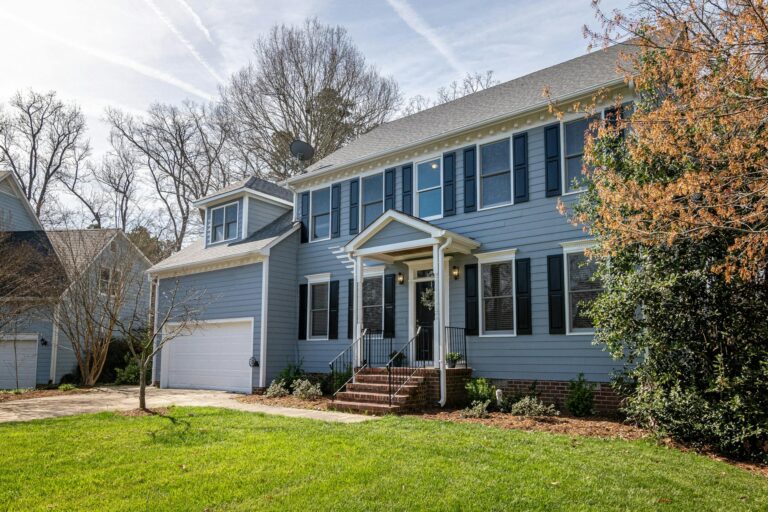

School Districts and Their Impact on Home Values
When people talk about what drives home values, they often focus on square footage, lot size, and updated kitchens. But one of the most powerful and consistent factors in real estate pricing is something most buyers only think about when they have kids in tow: school district quality. Even buyers without children should pay attention, because school districts can have a dramatic effect on what your home is worth today and what it will be worth when you are ready to sell.
At Mortgage Austin, we work with buyers across Central Texas and beyond, and we see this dynamic play out in neighborhoods all the time. Here is what you need to know.
Why School Districts Matter So Much to Home Values
The connection between school quality and home prices is well-documented in real estate research. Studies consistently show that homes in highly-rated school districts command a premium of anywhere from 5% to 25% compared to similar homes just outside those boundaries. In competitive markets like Austin, that gap can be even wider.
The reason is simple: demand. Families actively seek out top-rated districts, and that demand pushes prices up. Even buyers who do not have school-age children factor in resale value, knowing that a home in a strong school zone will be easier to sell and likely to appreciate faster.
How School Ratings Affect the Austin Area Market
The Austin metro is a great case study in how school district boundaries shape real estate markets. Neighborhoods zoned to highly-rated districts in Round Rock ISD, Eanes ISD, or Lake Travis ISD consistently outperform surrounding areas in price per square foot and days on market.
A home on one side of a school boundary and an almost identical home on the other side can have meaningfully different values, sometimes tens of thousands of dollars apart. That boundary effect is real and it matters when you are making an offer.
What Buyers Should Research
Before you fall in love with a home, it is worth doing a little homework on the school zone:
- GreatSchools.org ratings: A widely-used resource that scores schools on a 1-10 scale based on test scores, academic progress, and equity factors.
- Texas Education Agency (TEA) accountability ratings: The state rates districts and campuses as Exemplary, Recognized, Acceptable, or Needs Improvement.
- District rezoning history: Boundaries can change. Check whether the district has a history of redrawing attendance zones, which could affect a home you are considering.
- Future development plans: New residential growth sometimes triggers redistricting that shifts a neighborhood from one school to another.
The Resale Value Equation
Even if you are buying as a single adult or an empty nester, school district quality is a resale factor you cannot ignore. When it comes time to sell, your buyer pool in a strong school zone is significantly larger than in an average or below-average one. More buyers means more competition, which typically means faster sales and better offers.
Conversely, if you are buying in a lower-rated district expecting to flip or sell within a few years, be realistic about your exit strategy. Those homes can still appreciate, but the pace is often slower and the buyer pool is narrower.
School Districts and Property Taxes
Here is the trade-off nobody likes to talk about: top-rated school districts are often located in areas with higher property tax rates. In Texas, school districts set their own tax rates, and districts with robust budgets and strong facilities tend to levy higher rates.
That means buying into an excellent district can come with a higher property tax bill. When we help buyers calculate their monthly payment, we always factor in property taxes based on the specific county and district where the home is located, because the difference can be meaningful.
How to Balance School Quality and Affordability
If a top-tier district puts your target neighborhood out of budget, there are ways to get close:
- Look at homes just outside the most sought-after zones that still feed into the same high school
- Consider up-and-coming districts that are improving but have not fully priced in yet
- Look at magnet programs or open enrollment options that may give access to stronger schools regardless of address
Your real estate agent can help you map school boundaries and find value near the edges of desirable zones.
Getting the Right Mortgage for the Right Neighborhood
Whether you are prioritizing a specific school zone or just trying to understand how location affects your buying power, we can help. At Mortgage Austin, we work with buyers to make sure the entire picture, purchase price, taxes, insurance, and monthly payment, makes sense for your budget and your goals.
Get a free quote today and see what you qualify for in the neighborhoods that matter most to you.
Frequently Asked Questions
Do school district ratings really affect home prices that much?
Yes, consistently. Research shows homes in high-rated school districts often sell for 5% to 25% more than comparable homes in lower-rated districts. In competitive markets like Austin, the premium can be even higher.
What if I do not have kids? Should I still care about school districts?
Absolutely. School district quality affects your resale value and how large your buyer pool will be when you decide to sell. It is a real estate factor regardless of your family situation.
How do I find out which school district a home is in?
Your real estate agent can confirm the school zone for any property. You can also check GreatSchools.org, the Texas Education Agency website, or the specific district website by entering the home address.
Can school district boundaries change after I buy?
Yes. Districts sometimes redraw attendance zones as enrollment grows or new schools open. It is worth asking your agent whether the district has a history of rezoning, especially in fast-growing areas.
Do higher-rated school districts always have higher property taxes?
Not always, but it is common. In Texas, school districts set their own tax rates, and well-funded districts often have higher rates. We always calculate property taxes specific to the address when helping buyers understand their true monthly payment.
Ferrando Financial LLC | Mortgage Austin | NMLS# 2403080 | Licensed in Texas