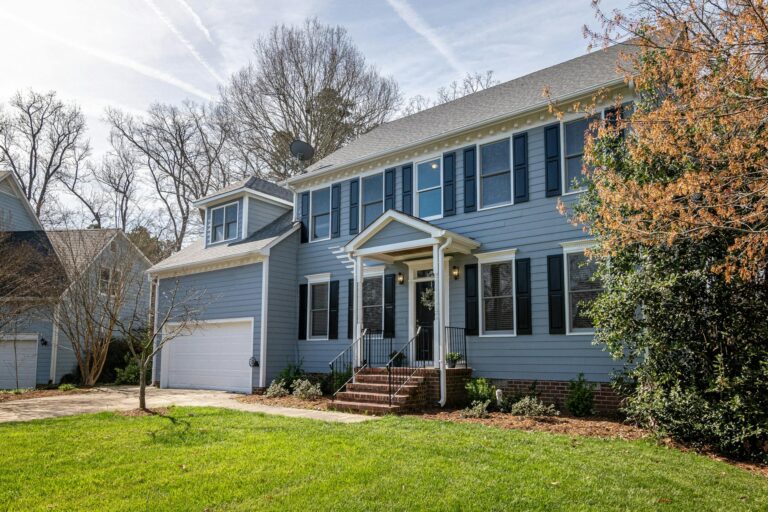

Austin’s Property Tax Reality: What a $500K Home Actually Costs Monthly
If you’re moving to Austin from California, New York, or Washington, you’ve probably already done some napkin math. No state income tax! Houses under a million! This is going to be great!
And it is great. But there’s one number that catches almost every relocator off guard: property taxes.
Texas property taxes are significantly higher than what most out-of-state buyers are used to, and they have a real, meaningful impact on your monthly mortgage payment. Let’s break down exactly what a $500,000 home in Austin actually costs each month, so there are no surprises at the closing table.
The Full PITI Breakdown for a $500K Austin Home
PITI stands for Principal, Interest, Taxes, and Insurance. It’s the real number you’ll see leave your bank account every month, not just the principal and interest that online calculators love to show you.
Here’s what it looks like for a $500,000 home in Travis County with 10% down:
Loan Details:
- Purchase price: $500,000
- Down payment: $50,000 (10%)
- Loan amount: $450,000
- Loan type: 30-year fixed conventional
Monthly Breakdown (estimated ranges):
- Principal & Interest: $2,700-$3,100/month (depends on your rate)
- Property Taxes: $750-$900/month (before homestead exemption)
- Homeowners Insurance: $150-$250/month
- PMI: $100-$200/month (with 10% down and 740+ credit)
Total Estimated PITI: $3,700-$4,450/month
That property tax line is the one that makes people do a double take. Let’s dig into why.
Why Texas Property Taxes Hit Different
Texas has no state income tax. That’s the headline everyone remembers. But the tradeoff is that local governments fund services, schools, and infrastructure almost entirely through property taxes.
In Travis County (where Austin sits), the effective property tax rate runs roughly 1.8-2.2% of your home’s appraised value. That’s before any exemptions.
On a $500,000 home, that means:
- Annual property taxes: roughly $9,000-$11,000
- Monthly escrow for taxes: roughly $750-$900
For comparison:
| State | Effective Property Tax Rate | Annual Tax on $500K Home |
|---|---|---|
| Texas (Travis County) | ~1.8-2.2% | ~$9,000-$11,000 |
| California | ~0.7-0.8% | ~$3,500-$4,000 |
| New York (suburban) | ~1.5-2.5% | ~$7,500-$12,500 |
| Washington | ~0.9-1.0% | ~$4,500-$5,000 |
Now, before you panic: California and Washington also have state income tax. When you factor in the income tax savings, the total tax burden in Texas often comes out comparable or even lower for high earners. But the way it shows up, baked directly into your monthly mortgage payment, is different. And that’s what catches people off guard.
What Buyers from California Don’t Expect
In California, Prop 13 caps your property tax assessment at the purchase price and limits annual increases to 2%. Your neighbor who bought in 1995 might be paying a fraction of what you pay on the same street.
Texas has no such cap on appraised value increases (though there is a 10% annual cap for homesteaded properties). Your property can be reassessed every year, and in a market like Austin where values have climbed significantly, that means your tax bill can jump.
This is why the mortgage conversation matters so much. When we work with relocators at Mortgage Austin, we don’t just quote a rate and a payment. We build the full PITI picture so you know exactly what you’re signing up for, not a surprise six months later when your escrow account adjusts.
The Homestead Exemption: Your First Line of Defense
If the property you’re buying will be your primary residence, you qualify for a homestead exemption in Texas. Here’s what it does:
- School district taxes: Exempts $100,000 of your home’s appraised value from school district taxes (this is the biggest piece)
- County/city taxes: Many jurisdictions offer additional exemptions, typically $5,000-$25,000
- Over 65 or disabled: Additional $10,000 exemption from school district taxes, plus a tax ceiling (freeze) on school taxes
- 10% annual cap: Once homesteaded, your appraised value for tax purposes can’t increase more than 10% per year
On a $500,000 home, the homestead exemption can save you roughly $1,000-$2,000 per year in property taxes. That’s real money.
Important: You have to file for it. It’s not automatic. File with the Travis Central Appraisal District (TCAD) by April 30 of the year following your purchase. Don’t wait.
The Protest Process: How Austin Homeowners Fight Back
Every year, TCAD sends you a notice of appraised value. If you think it’s too high (and in Austin, it often is), you have the right to protest.
Here’s the quick version:
- Review your notice (usually arrives in April)
- File a protest by the deadline listed on your notice (typically May 15 or 30 days after the notice date)
- Gather evidence: recent comparable sales, condition issues, photos
- Attend an informal hearing with an appraiser (or submit evidence online)
- If no agreement, go to ARB (Appraisal Review Board) for a formal hearing
Many homeowners, especially those in rapidly appreciating areas, successfully reduce their appraised values by 5-15% through the protest process. Some hire property tax consultants who work on contingency (they only get paid if they save you money).
This isn’t a nice-to-have. In Austin, protesting your property taxes is practically a civic tradition. If you’re not doing it, you’re probably paying more than you should.
Why This Makes the Mortgage Conversation So Important
Here’s the point we drive home with every client at Mortgage Austin: your mortgage rate is only part of the equation. In Texas, your property taxes and insurance can make up 30-40% of your total monthly housing cost.
That’s why we look at the full picture when you’re getting pre-qualified:
- What neighborhood are you targeting? (Tax rates vary by school district and MUD)
- Have you factored in the homestead exemption timeline?
- Are you comparing total PITI, not just principal and interest?
- If you’re relocating, have you modeled the state income tax savings against the higher property tax?
This is the kind of strategic thinking that makes working with an independent mortgage advisor different from plugging numbers into an online calculator. We’d love to walk you through it for your specific situation.
A Note on MUDs and Special Districts
If you’re looking at newer communities in the Austin suburbs (Leander, Pflugerville, Manor, Buda), you may encounter Municipal Utility Districts, or MUDs. These are special taxing districts that fund infrastructure like roads, water, and drainage for new developments.
MUD tax rates can add an additional 0.5-1.5% on top of your regular property tax rate. On a $500K home, that could mean an extra $2,500-$7,500 per year.
Not all MUDs are bad; they often fund the very infrastructure that makes those communities livable. But you need to know about them before you buy, because they directly affect your monthly payment. Your agent should disclose this, and we always factor it into your loan options analysis.
Already Shopping for a Home?
If you’re actively looking in Austin and want to see real numbers for your situation, get a free quote. We’ll build a full PITI estimate based on where you’re buying, your down payment, and your credit profile, so you can search with confidence.
And if you already have a Loan Estimate from another lender, our Second Look program will show you what wholesale pricing looks like next to it. No pressure, just clarity.
Frequently Asked Questions
How much are property taxes on a $500K home in Austin?
In Travis County, property taxes on a $500,000 home typically run $9,000-$11,000 per year before the homestead exemption. After filing for homestead, you can save roughly $1,000-$2,000 annually.
Do I automatically get a homestead exemption in Texas?
No. You must file for it with your county’s appraisal district. In Travis County, file with TCAD by April 30 of the year after you purchase. It’s free to file, and there’s no reason not to.
Can I protest my property taxes in Austin?
Absolutely. You can protest your appraised value every year. Many Austin homeowners successfully reduce their valuations by 5-15%. You can do it yourself or hire a property tax consultant who works on contingency.
How do Texas property taxes compare to California?
Texas has higher property tax rates (roughly 1.8-2.2% in Travis County vs. 0.7-0.8% in California), but Texas has no state income tax. For high earners, the total tax burden is often comparable when you account for the income tax savings.
Why is my monthly payment so much higher than the online calculator showed?
Most online mortgage calculators show principal and interest only. In Texas, property taxes and homeowners insurance add significantly to your payment, often 30-40% more than the P&I figure. That’s why working with a mortgage advisor who shows you the full PITI picture is essential.
Moving to Austin and want to see real numbers? Get a free quote or contact us for a full PITI breakdown tailored to where you’re buying.
Ferrando Financial LLC | NMLS# 2403080
Tony Ferrando | NMLS# 1919613