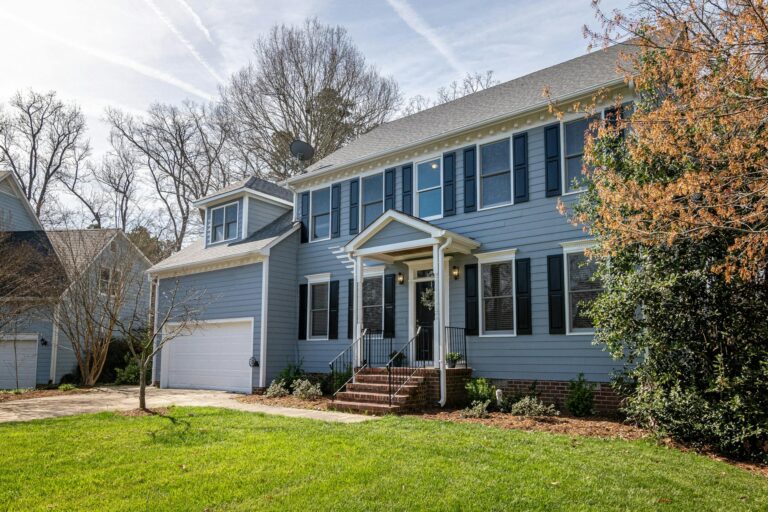

How HOA Fees Affect Your Mortgage Qualification in Texas
When buyers start calculating what they can afford, most think about the down payment, the loan amount, and the monthly mortgage payment. What often gets overlooked until it shows up in underwriting is the homeowners association fee. If you are buying in a planned community, a condo building, or a master-planned neighborhood in Texas, HOA fees are part of your mortgage qualification math, and they can move the needle on what you actually qualify for.
Here is how it works, what the numbers look like, and what to ask before you make an offer.
HOA Fees Are Counted as Part of Your Housing Expense
When a lender calculates your debt-to-income ratio, they look at two buckets of debt. The first is your total housing expense, which includes your principal and interest payment, property taxes, homeowners insurance, and any HOA dues. The second bucket covers all other monthly obligations: car payments, student loans, credit card minimums, and personal loans.
HOA fees fall into the first bucket. They are not treated the same as a car payment, but they are added to your total housing cost, which means they directly affect how much mortgage payment you can carry.
How DTI Limits Work in Practice
Most conventional loan programs allow a total debt-to-income ratio up to 45 percent, with some allowance to 50 percent for well-qualified borrowers with compensating factors like strong reserves or a high credit score. FHA loans can go higher in some cases, up to 57 percent with automated underwriting approval.
Here is a simplified example. Say you earn $8,000 per month gross. A 45 percent DTI cap means your total monthly debt payments, including housing, cannot exceed $3,600. If your principal, interest, taxes, and insurance add up to $3,200 and you are buying in a community with a $400 per month HOA fee, your total housing expense is $3,600. You are at the limit before any other debt is considered. A $400 per month car payment on top of that pushes you out of qualification range entirely.
The Real Impact on Your Purchase Price
Even a modest HOA fee can reduce your effective purchasing power in a meaningful way. At a gross income of $8,000 per month and a 45 percent DTI ceiling, with $300 per month in existing debt obligations, every $100 per month in HOA fees is roughly $15,000 to $20,000 in reduced purchasing power at current rates depending on your loan term and interest rate.
For buyers sitting close to a qualification threshold, this is not a rounding error. A $350 per month HOA community versus a $50 per month HOA community is a $300 per month swing. That is the equivalent of a significantly smaller loan amount, which shows up directly in how much house you can buy.
This is why we always ask buyers who are targeting HOA communities to share the fee amount early, before we finalize a pre-approval number. Building the right figure in from the start means no surprises when you are already in contract.
What Types of HOA Fees Count
Monthly dues are always counted. But there are a few other situations worth knowing:
Special Assessments
These are one-time fees levied by the HOA for major repairs or improvements, such as roof replacements on a condo building or a pool renovation in a master-planned community. Underwriters will look at whether a special assessment is currently in effect or pending. If it is ongoing, it may be factored into your monthly housing expense depending on the loan program and the size of the assessment.
Condo Fees
For condo purchases, the fee structure is often more complex because it may include building insurance and sometimes utilities within the HOA payment. Your lender will need a condo questionnaire completed by the HOA to determine what is included and whether the project meets agency guidelines for conventional, FHA, or VA financing.
Multi-Layer HOA Structures
In Texas, it is common to find multiple layers of HOA dues in master-planned communities, a master association covering shared infrastructure and amenities plus a sub-association for a specific product type or neighborhood section. Both fees count toward your housing expense. Make sure you know every layer before you run your numbers.
New Construction Communities in Austin and DFW
Many master-planned communities in the Austin, Dallas-Fort Worth, and Houston metros set HOA fees low during the initial sales phase and raise them once the community reaches full build-out and full amenity operation. If you are buying new construction, ask the builder representative for the projected HOA fee structure, not just the current introductory rate. Your lender will qualify you on the disclosed amount, but knowing where fees may land in year two or three helps you plan your budget accurately.
Questions to Ask Before You Make an Offer
Before you fall in love with a home in an HOA community, get answers to these questions:
What is the monthly dues amount and is it expected to change? Some HOAs have scheduled increases built into their budget projections. Ask for the current budget and any approved fee changes.
Is there a special assessment currently pending or recently passed? A large pending assessment could affect your qualification and your first year of ownership costs.
What does the HOA fee cover? In some communities, dues include landscaping, amenities, and exterior maintenance. In others, they cover very little. Know what you are paying for before comparing communities.
What are the financial reserves? A well-funded HOA is less likely to levy sudden special assessments. Ask for the most recent reserve study or budget summary to understand the financial health of the association.
Are there rental restrictions? If you plan to rent the property at any point, some HOAs restrict this or require a waiting period. This matters particularly if you are considering the investment angle on the purchase. We cover this in more detail on our loan options page.
How We Factor This Into Your Pre-Approval
When we run your pre-approval, we want to know if you are targeting HOA communities so we can build the correct fee into your numbers from the start. There is nothing worse than going under contract on a home in a $350 per month HOA community and discovering mid-process that you need to reduce your loan amount or pay down debt to make the qualification math work.
Being proactive about this takes about two minutes. Tell us the target community and we will look up the HOA dues. If you do not know the exact community yet, give us a range and we will build a buffer into your pre-approval so you are not surprised. You can start your pre-approval here or contact us directly and we will walk through your full numbers together.
Frequently Asked Questions
Do HOA fees always count toward my DTI?
Yes. Monthly HOA dues are counted as part of your housing expense in every conventional, FHA, and VA loan calculation. The only exception would be certain nominal one-time transfer or move-in fees that are clearly not ongoing dues.
What happens if the HOA has a special assessment pending?
It depends on the amount and the timeline. Underwriters evaluate whether the assessment is ongoing or upcoming and may add it to your monthly housing expense for qualification purposes. Your lender will ask for HOA documentation that discloses any pending assessments before issuing final approval.
Can a high HOA fee disqualify me from buying a property I can otherwise afford?
Yes, if adding the HOA fee pushes your total housing expense over the DTI limit for your loan program. This is more common than buyers expect, particularly in communities with fees above $400 per month. The most common solutions are a lower purchase price, paying down other monthly debts to create room within the DTI ceiling, or a larger down payment to reduce the mortgage balance.
Are HOA fees tax deductible?
Generally, no. For a primary residence, HOA fees are not deductible on your federal income tax return. For an investment property, HOA fees may be deductible as a rental expense. Consult a tax professional for guidance specific to your situation.
What is a condo questionnaire and why does my lender need it?
A condo questionnaire is a document completed by the HOA that gives lenders the information needed to determine whether the project meets Fannie Mae, Freddie Mac, FHA, or VA guidelines. It covers owner-occupancy rates, delinquent dues, pending litigation, insurance coverage, and the percentage of units owned by a single investor entity. If the project does not meet agency guidelines, your financing options may be limited, and knowing this early prevents surprises.
Anthony Ferrando NMLS# 1919613 | Client Direct Mortgage NMLS# 1065732 | Licensed in Texas. This content is for educational purposes only and does not constitute a commitment to lend. Loan approval is subject to credit, income, and property qualification. DTI limits and program guidelines vary by loan type and are subject to change.