
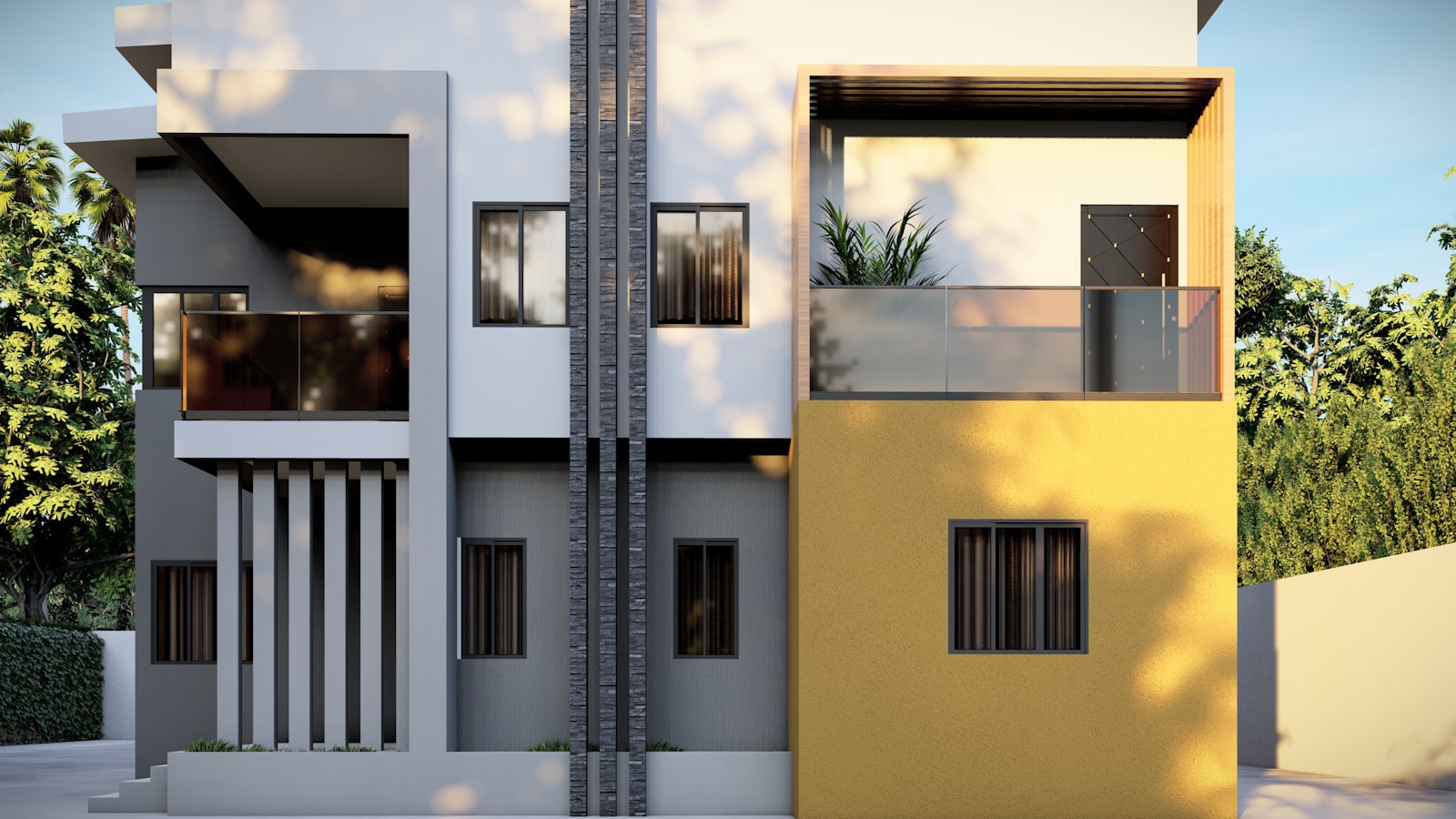
House Hacking Myths Austin Buyers Should Stop Believing
Austin’s median sold price hit $452,250 in the Team Price Real Estate report published July 3, 2026. At that price, plenty of buyers look at a monthly payment and decide ownership is out of reach. Some of them are walking past a workaround that has been sitting in plain sight for decades: buying a small multifamily property, living in one unit, and letting rent from the others carry part of the mortgage. The strategy now goes by the name house hacking, and it is surrounded by more bad information than almost any topic we field at Mortgage Austin.
The myths matter because they stop people before they start. Buyers assume they need a commercial loan, a landlord resume, or a 25 percent down payment, so they never run the numbers. This post walks through the biggest house hacking myths one at a time and lays out what the lending rules actually say.
Key points:
- An owner-occupied 2 to 4 unit property counts as a primary residence, so it qualifies for standard Conventional, FHA, and VA financing.
- FHA allows 3.5 percent down on 2 to 4 units, and Fannie Mae cut the conventional minimum on owner-occupied 2 to 4 unit homes to 5 percent in late 2023.
- Eligible veterans can buy up to 4 units with 0 percent down through a VA loan.
- Lenders can typically count 75 percent of the market rent from the units you do not occupy toward your qualifying income.
- FHA applies a self-sufficiency test to 3 and 4 unit properties, and many Austin fourplexes fail it at today’s prices.
- You must live in one unit as your primary residence, generally for at least 12 months.
What is house hacking and does it work in Austin?
House hacking means buying a property with 2 to 4 units, living in one, and renting out the rest. Because you occupy one unit, lenders treat the whole property as your primary residence, which unlocks lower down payments and better pricing than investment loans. In Austin, where the median price sits above $450,000, rent from one or two extra units can offset a meaningful share of the monthly payment.
The math is the whole appeal. Suppose a duplex costs more than a comparable single-family home, but the second unit rents for $1,500 a month. That rent shows up twice: it helps you qualify for the loan on paper, and it helps you pay the mortgage in real life. With 6.0 months of supply and 70 average days on market in the July 3, 2026 Team Price data, Austin buyers also have negotiating room that did not exist during the frenzy years.
Myth 1: You need an investment property loan to buy a duplex
This is the myth that kills the most deals before they start. Investment property loans carry higher rates, bigger down payments, and stricter reserve requirements, so buyers who assume they need one often quit at the research stage.
The rule is simpler. If the property has 1 to 4 units and you will live in one of them, it is a primary residence in the eyes of Fannie Mae, Freddie Mac, FHA, and the VA. Standard owner-occupied programs apply. The 5-unit mark is where everything changes: at 5 or more units you are in commercial lending territory, with different loans, different underwriting, and different math entirely.
One honest caveat: occupancy is a legal commitment, and lenders take it seriously. You generally need to move into your unit within 60 days of closing and live there for at least 12 months. Claiming owner occupancy you do not intend to honor is mortgage fraud. Plan to actually live there.
Myth 2: Small multifamily requires 20 to 25 percent down
That was close to true for conventional loans until late 2023, when Fannie Mae dropped the minimum down payment on owner-occupied 2 to 4 unit properties to 5 percent. FHA has allowed 3.5 percent down on 2 to 4 units for years, and VA loans can go to 0 percent down for eligible veterans on up to 4 units. Here is how the owner-occupied minimums compare:
| Loan type | Units allowed | Minimum down payment | Notes |
|---|---|---|---|
| Conventional (Fannie Mae) | 2 to 4 | 5% | Reduced from 15 to 25% in late 2023; loan must fit conforming limits |
| FHA | 2 to 4 | 3.5% | Upfront and monthly mortgage insurance apply; self-sufficiency test on 3 to 4 units |
| VA | 2 to 4 | 0% | Eligible veterans and service members; funding fee applies unless exempt |
Loan limits are the constraint to watch in Austin. For 2026, HUD set the FHA limit for Travis and Williamson counties at $563,500 for a single unit, $693,050 for a duplex, $837,700 for a triplex, and $1,041,125 for a fourplex (HUD Mortgagee Letter 2025-23). Multi-unit properties get higher limits than single-family homes, which is part of what keeps FHA house hacking viable here even at Austin prices.
How much of the rental income counts toward qualifying?
Lenders can typically credit 75 percent of the market rent from the units you will not occupy toward your qualifying income. The appraiser documents market rent on a comparable rent schedule during the appraisal, so you do not need signed leases before closing on a vacant unit. The 25 percent haircut accounts for vacancy and maintenance. That credit lowers your debt-to-income ratio (DTI, the share of your gross monthly income that goes to debt payments), which can be the difference between an approval and a denial.
A quick illustration. If the other side of a duplex carries a market rent of $1,600, a lender can generally add $1,200 a month to your qualifying income. At a 45 percent DTI cap, that supports roughly $2,600 more in monthly debt capacity than your salary alone would. Program rules differ on the details: FHA and conventional guidelines document rental income differently, and some conventional scenarios require the borrower to have a housing history or reserves. This is worth mapping out with a lender before you shop, not after. Our Austin affordability breakdown covers how DTI works in more depth.
Myth 3: If FHA allows 3.5 percent down, any fourplex will work
FHA applies an extra hurdle to 3 and 4 unit properties called the self-sufficiency test. Seventy-five percent of the property’s total market rent (all units, including yours) must cover the entire monthly payment: principal, interest, taxes, and insurance. If it falls short, FHA will not insure the loan no matter how strong your income is.
At Austin’s price-to-rent ratios, many triplexes and fourplexes fail this test. A $900,000 fourplex with units renting near $1,500 each produces $4,500 in countable rent against a payment that will usually run well above that at current rates (the 30-year average was 6.49 percent in Freddie Mac’s PMMS for the week ending July 9, 2026). Duplexes are exempt from the test, which is one reason they are the most common FHA house hack. For 3 and 4 unit deals, conventional or VA financing often pencils where FHA cannot.
Myth 4: House hacking is only for seasoned investors
First-time buyers are arguably the best positioned people in Austin to house hack. You do not need landlord experience to qualify, and being a first-time buyer does not restrict you to single-family homes. An FHA loan on a duplex is a common first purchase, and the rental income rules above apply to first-timers the same as anyone else.
What you do need is a realistic picture of the job. You will live next to your tenants. Repairs, vacancies, and late rent become your problems at close range. Budget for maintenance and keep reserves after closing even when your loan program does not require them. The buyers who struggle with house hacking usually underestimated the operational side, not the financing side.
Frequently Asked Questions
Can I buy a duplex in Austin with an FHA loan?
Yes. FHA allows 2 to 4 unit properties with 3.5 percent down as long as you live in one unit as your primary residence. For 2026, the FHA loan limit for a duplex in Travis and Williamson counties is $693,050 per HUD Mortgagee Letter 2025-23. Approval is subject to credit, income, and property qualification.
How much down payment do I need for an owner-occupied duplex?
As little as 0 percent with a VA loan if you are an eligible veteran, 3.5 percent with FHA, or 5 percent with a conventional loan under Fannie Mae’s late-2023 rule change for owner-occupied 2 to 4 unit homes. Investment-property loans, by contrast, usually start around 20 to 25 percent down.
Does rental income count toward my mortgage qualification?
Usually yes. Lenders can typically count 75 percent of the market rent from the units you will not occupy, documented by the appraiser on a comparable rent schedule. You generally do not need tenants in place before closing. Exact documentation rules vary by loan program and scenario.
How long do I have to live in the property?
Owner-occupied loan programs generally require you to move in within 60 days of closing and occupy the property as your primary residence for at least 12 months. After that period you can typically move out and keep the property as a rental, subject to your loan documents.
What is the FHA self-sufficiency test?
For 3 and 4 unit properties, FHA requires that 75 percent of the total market rent from all units covers the full monthly payment of principal, interest, taxes, and insurance. If it does not, FHA will not insure the loan. Duplexes are exempt, which makes them the most common FHA house hack in Austin.
Can a first-time buyer house hack in Austin?
Yes. There is no landlord-experience requirement for owner-occupied 2 to 4 unit financing, and first-time buyers can use FHA, VA, or conventional programs on multifamily properties. The rental income credit and low down payment options apply to first-timers the same as repeat buyers.
If you are weighing a duplex against a single-family home, the right answer depends on your income, your down payment, and how the rental numbers pencil on the specific property. Schedule a discovery call and we’ll walk through your options together, no pressure, no commitment, just clarity.
Anthony Ferrando NMLS# 1919613 | Client Direct Mortgage NMLS# 1065732 | Licensed in Texas. This content is for educational purposes only and does not constitute a commitment to lend. Loan approval is subject to credit, income, and property qualification. Rate figures are illustrative, drawn from the Freddie Mac Primary Mortgage Market Survey for the week ending July 9, 2026, and do not represent a quote or offer of credit. Rental income treatment, loan limits, and program requirements vary by loan program and are subject to change. Sources: Team Price Real Estate (July 2026), HUD Mortgagee Letter 2025-23, Freddie Mac PMMS (July 2026).